
Cameron Briggs, Vente AI: The Business Development Habits That Help Recruiters Win New Clients
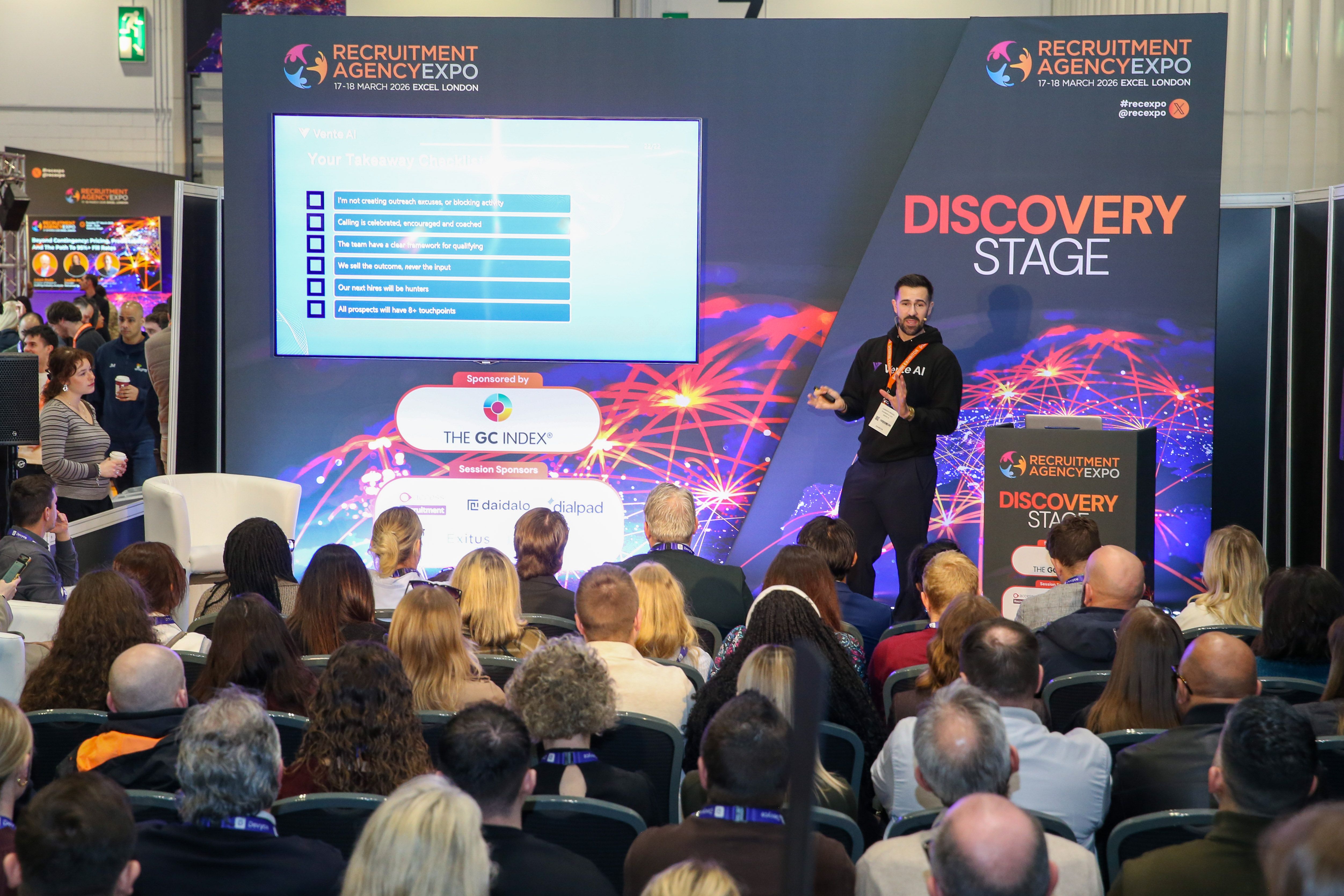
Winning new clients is a priority for recruitment agencies, but increasing outreach does not automatically create more opportunities. The habits behind that activity — how consultants approach prospects, communicate value and follow up — can make a significant difference.
In his Recruitment Agency Expo London 2026 session, Finding New Clients in 2026 – The Good, The Bad, and The Ugly, Cameron Briggs, Founder and CEO of Vente AI, explored the behaviours that help recruiters win business and the weaknesses that can hold teams back.
His message to agency leaders was practical: give consultants the structure, support and skills to turn consistent business development into meaningful client conversations. That starts with understanding what clients need to achieve and making that outcome central to the approach.
Giving clients a reason to respond
Recruitment outreach often begins with the agency’s credentials. A consultant introduces their specialism, describes their candidate network and offers somebody with impressive experience.
Briggs argues that this can leave the recipient to work out why any of it matters. The email explains what the recruiter does, but gives the prospective client little reason to start a conversation.
During the session, he used an engineering hire to illustrate the difference. For the employer, the value of that appointment might be delivering a product feature, meeting a customer deadline or reducing pressure on an overstretched team.
Understanding those consequences changes the message. The recruiter can connect their expertise to something the client wants to achieve, rather than relying on a general promise to find good candidates.
For agency leaders, this raises a useful question: how much of the team’s outreach describes the recruitment service, and how much explains its potential business value?
Shorter emails need sharper thinking
Briggs contrasted a lengthy candidate pitch with a brief message asking whether an advertised engineering role had a deadline the business could not afford to miss.
He preferred the shorter approach because it was quick to read, opened with a relevant question and linked the recruiter’s expertise to a possible business outcome. It gave the recipient a reason to engage without asking them to absorb an entire sales pitch.
His advice was to consider three questions when developing outreach:
- What could an unsuccessful hire cost the client’s business?
- Where could the hiring manager spend their time if recruitment required less of their attention?
- What could an excellent hire deliver over the next six to twelve months?
The answers will vary by client, role and sector. Their value lies in helping recruiters think beyond the vacancy and understand why filling it matters.
Briggs suggested keeping initial emails under 50 words as a starting point for testing. The aim is to make the message clear enough for a busy recipient to understand its relevance quickly.
A calling culture starts with leadership
Briggs described beginning his sales career as an introvert who felt nervous about picking up the phone. Working in an environment where calling was expected, supported and coached helped him develop confidence.
That experience shaped his advice to agency leaders. Asking consultants to make more calls is only part of the job; managers also need to create the conditions that make those calls productive.
Relevant leads, accessible information and regular coaching all matter. If consultants spend much of their time researching prospects or completing administration, increasing their targets leaves the underlying obstacles unresolved.
Protected calling blocks were one practical suggestion. Setting aside distractions such as email, Teams and Slack gives consultants time to concentrate on speaking to prospects.
Calling together can also help. A team environment allows recruiters to hear how colleagues handle conversations, share what works and celebrate progress. For less confident consultants, that support can make a demanding activity feel more manageable.
Measuring the conversations behind the activity
Activity targets provide structure, but they can give an incomplete picture of performance.
Briggs recalled leaving voicemails early in his career partly because they registered as call time. The figures looked better, although he had not actually spoken to the prospect.
It is an example of how a measurement can encourage activity without necessarily advancing the sales process.
He described placing greater emphasis on a smaller number of worthwhile conversations, asking team members to explain what made them valuable.
For managers, this creates a more useful coaching discussion. What did the consultant learn about the business? Did they uncover a hiring problem? Was a next step agreed?
Call volumes still help leaders understand consistency and effort. Examining the quality of conversations alongside those figures gives them a clearer view of whether the activity is creating opportunities.
Qualifying the opportunity behind the vacancy
Getting a response is the beginning of the sales process. Recruiters then need to establish whether the opportunity is one they can realistically win and deliver.
Briggs discussed qualification frameworks as a way to bring greater consistency to client meetings. The practical questions concern the need for the hire, the available budget, who makes the decision and the timeline.
An engineering vacancy becomes a clearer opportunity when the recruiter understands why the team is struggling, what a delay would affect and when the new employee must be in place.
Knowing who approves the appointment and expenditure is equally important. These details help an agency judge where to commit its time and give the consultant a stronger basis for discussing value and fees.
For agency leaders, the benefit is better visibility. A well-qualified opportunity provides more useful information than a vacancy on its own.
Keeping business development consistent
Briggs encouraged agencies to give outreach a deliberate structure across channels appropriate to their market, including email, phone and LinkedIn.
A prospect who does not respond to the first approach should not automatically disappear from the pipeline. Consultants need a follow-up plan that gives them further opportunities to establish relevance and begin a conversation.
The timing should reflect the market. An urgent operational hire may require a different approach from an executive search relationship developed over several months.
Consistency also depends on protecting business development time when consultants become busy with delivery. Briggs encouraged leaders to build dedicated BD blocks into the working day so that winning future business remains a regular activity.
Turning better habits into better opportunities
The session’s central message was that effective business development requires more than enthusiasm or higher activity targets.
Consultants need to understand the outcomes clients care about, communicate them clearly and have the confidence to explore those needs in conversation. Leaders need to support that work with relevant leads, protected time, coaching and a consistent approach to qualification.
For recruitment agencies reviewing their sales performance, these are practical areas to examine. Small improvements in how the team approaches, engages and qualifies prospects can help make its business development effort more purposeful.
Key takeaways
- Connect recruitment expertise to the business outcome a successful hire could deliver.
- Keep initial outreach brief, relevant and easy to respond to.
- Support calling with relevant leads, protected time and regular coaching.
- Assess the quality of conversations alongside activity volumes.
- Understand the client’s need, budget, decision-making process and deadline.
- Build consistent follow-up across channels suited to the market.
Explore the future of recruitment at Recruitment Agency Expo London
From agency profitability and productivity to AI, technology and changing client expectations, Recruitment Agency Expo London brings the industry's biggest business questions together under one roof. Meet recruitment leaders, technology providers and industry experts at ExCeL London on 16–17 March 2027.